
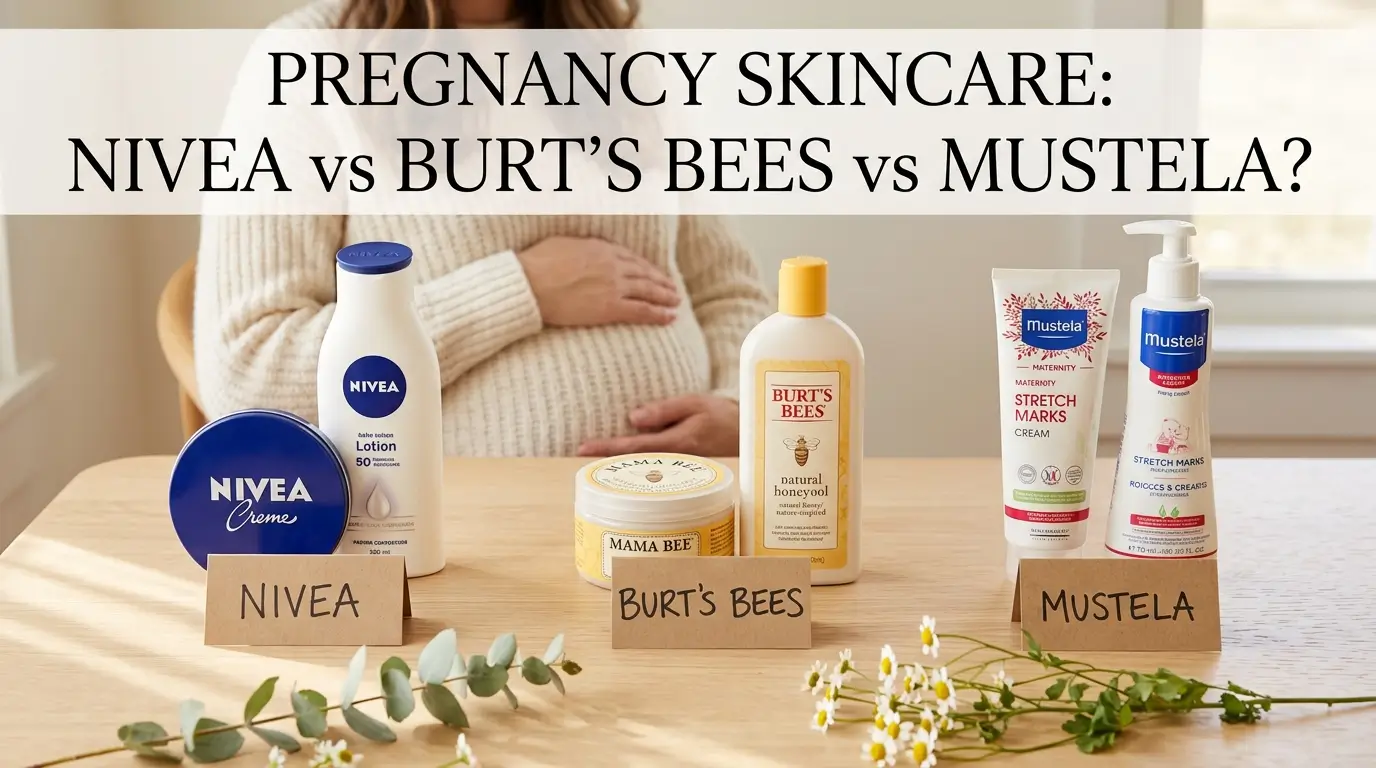
Pregnancy brings many changes to your body, including changes in your skin. You may notice dryness, itching, acne, increased sensitivity, or stretch marks as your pregnancy progresses. These changes can make you think more carefully about the skincare products you use every day.
If you are wondering, “I’m a pregnant woman. Are NIVEA products safe compared to Burt’s Bees or Mustela?” you are not alone. Many expecting mothers want products that moisturize their skin without exposing themselves or their developing babies to ingredients they should avoid.
NIVEA, Burt’s Bees, and Mustela offer different types of skincare products. NIVEA is widely known for its moisturizers and everyday body care, Burt’s Bees emphasizes many naturally derived ingredients, and Mustela has products specifically designed for babies and expectant mothers.
However, one brand is not automatically safer than the others in every situation. The most important factors are the individual product’s ingredients, how you plan to use it, your skin type, and any advice from your healthcare provider.
In this guide, we will compare NIVEA, Burt’s Bees, and Mustela, explain which ingredients deserve attention during pregnancy, and discuss how to choose skincare products with greater confidence.
Are NIVEA Products Safe During Pregnancy?
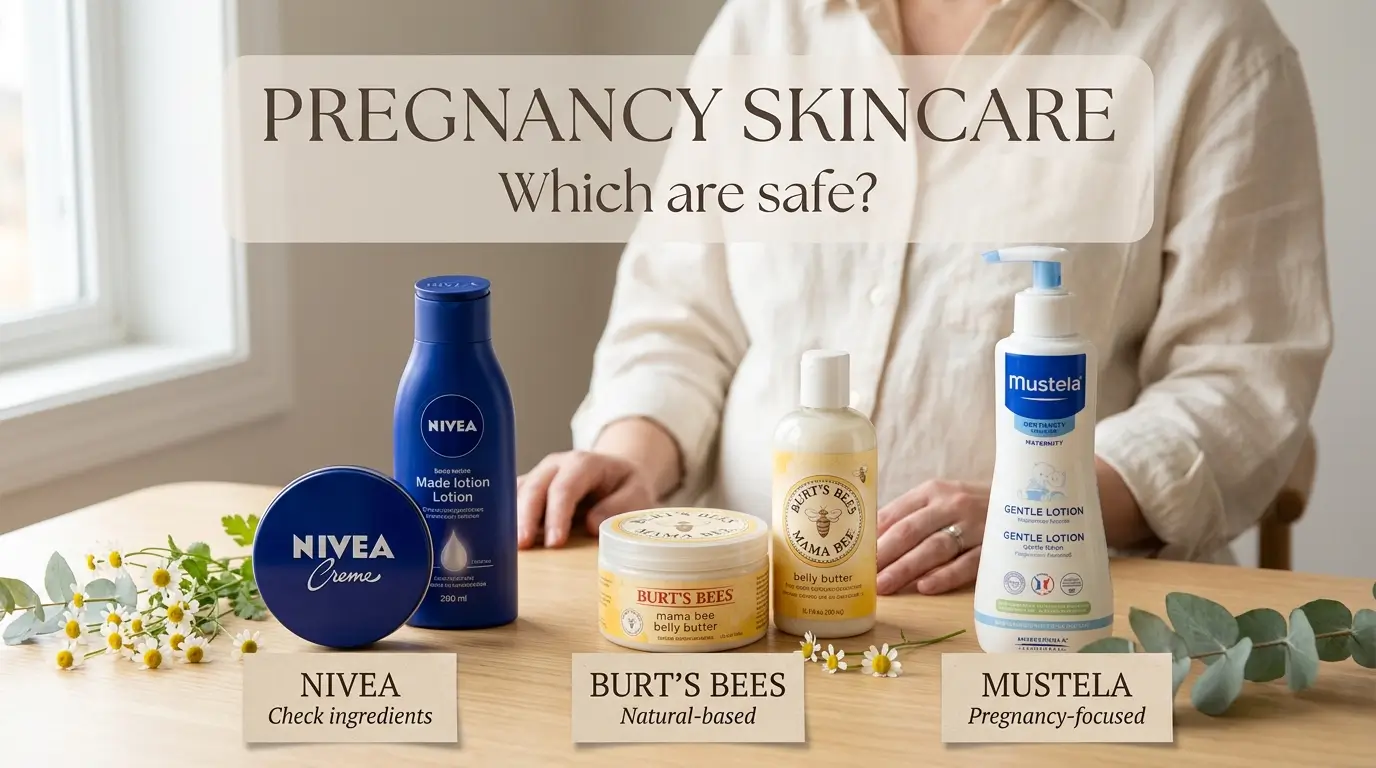
In general, many ordinary NIVEA skincare products, such as basic moisturizers and body creams, can be suitable for use during pregnancy.
NIVEA states in its official product safety guidance that its cosmetic products are evaluated for safety and skin compatibility and are considered suitable for pregnant and breastfeeding women. The company also recommends seeking individual medical advice if you have specific concerns. Read NIVEA’s pregnancy and breastfeeding guidance.
This is reassuring if you already use NIVEA Creme, NIVEA Soft, or a basic body moisturizer. You do not necessarily need to replace every familiar product simply because you are pregnant.
Nevertheless, it is important to understand that skincare products serve different purposes. A basic moisturizing cream is not the same as a concentrated anti-aging serum, an acne treatment, or a skin-lightening product.
Which NIVEA Products Should You Consider?
If you want to keep your skincare routine simple, consider ordinary moisturizing products that are suitable for your skin and do not contain ingredients your healthcare provider has advised you to avoid.
Examples include:
- NIVEA Creme: A rich cream commonly used to moisturize dry skin.
- NIVEA Soft: A lighter moisturizing cream for everyday use.
- NIVEA body lotions: Products intended to help maintain skin moisture.
- NIVEA body oils: Certain products may be useful for moisturizing and massaging dry skin.
These examples are not a blanket approval of every formula sold under the NIVEA name. Product ingredients can differ between countries and product versions, so read the label of the exact product you intend to use.
Are NIVEA Products Good for Stretch Marks?
Stretch marks are common during pregnancy. They develop when the skin stretches as your body changes, and genetics and hormonal factors also influence their appearance.
Moisturizers and body oils can help reduce dryness and make stretching skin feel more comfortable. Gentle massage may also make applying moisturizer a relaxing part of your daily routine.
NIVEA’s body care guidance identifies its Q10 Firming Body Oil as an option for massaging the belly during pregnancy.
However, moisturizing products cannot guarantee that you will avoid stretch marks. Even if you use a cream regularly, stretch marks may still develop.
If your main concern is dry or itchy skin, a simple moisturizer may be sufficient. If itching is severe, persistent, or affects your palms and soles, contact your maternity care provider rather than assuming it is ordinary skin stretching.
Are Burt’s Bees Products Safe During Pregnancy?
Burt’s Bees is known for products that use many naturally derived ingredients, including beeswax, botanical oils, and plant extracts.
Some of its lip balms, body moisturizers, and other basic skincare products may be suitable during pregnancy. However, the word “natural” does not automatically mean a product is safer for an expecting mother.
Plant-derived ingredients can still cause irritation or allergic reactions. Essential oils and fragrances may also be unsuitable for some people, particularly when pregnancy makes their skin more sensitive.
Burt’s Bees explains that its individual product pages and packaging provide ingredient lists, making it possible to review the formula before purchasing. You can find this information on the official Burt’s Bees ingredients FAQ.
What Are the Benefits of Burt’s Bees?
Depending on the product, Burt’s Bees may appeal to pregnant women who prefer certain plant-based ingredients or want a simple product for everyday moisturizing.
Potential benefits include:
- Products containing moisturizing oils and waxes.
- Options for lips, hands, and dry skin.
- Ingredient lists that help you identify potential allergens.
- Choices that may suit people who prefer naturally derived ingredients.
However, these benefits depend on the individual formula.
For example, a basic lip balm and a fragranced body product can have very different ingredients. They should not be treated as equally suitable simply because they come from the same brand.
Should Pregnant Women Avoid Essential Oils?
Not every essential oil presents the same concern, and the risk depends on the ingredient, concentration, route of exposure, and intended use.
Nevertheless, concentrated essential oils deserve particular care during pregnancy. Some have limited pregnancy-specific safety information, and certain products may cause skin irritation.
If you are considering a Burt’s Bees product containing essential oils, review the full ingredient list and ask your healthcare provider if you are unsure about a particular ingredient.
If your skin has become sensitive, a fragrance-free moisturizer with a short ingredient list may be a more comfortable choice.
Is Mustela Safer Than NIVEA or Burt’s Bees During Pregnancy?
Mustela is particularly relevant to this comparison because the company offers a dedicated maternity skincare range.
Its maternity products include stretch mark creams, oils, serums, and other products designed for skin changes associated with pregnancy and breastfeeding.
According to Mustela, its maternity formulas undergo safety assessments involving toxicology expertise. The company also provides ingredient information and instructions for individual products. You can explore its official pregnancy and maternity skincare range.
For someone specifically looking for pregnancy-focused body care, Mustela can be a convenient option.
Why Might You Choose Mustela?
Mustela’s maternity range is designed with the needs of expecting mothers in mind. Depending on the formula, its products may help:
- Moisturize the belly, thighs, and other areas affected by stretching.
- Reduce the feeling of dryness and tightness.
- Keep skin feeling softer and more comfortable.
- Support a consistent skincare routine during pregnancy.
- Provide product-specific guidance for pregnancy and breastfeeding.
Some Mustela products contain ingredients such as glycerin, shea butter, avocado oil, or other plant-derived components.
These ingredients can help support skin hydration and softness. However, the exact formula still matters, especially if you have allergies or prefer to avoid fragrance.
Does Mustela Prevent Stretch Marks?
Mustela markets certain maternity products for improving skin elasticity and helping prevent the appearance of stretch marks.
Some product claims are supported by user assessments conducted under dermatological supervision. For example, the company’s stretch mark cream page describes a product-use test involving 64 pregnant women over three months.
Such results can help explain how participants perceived the product, but a small self-assessment study does not establish that a cream will prevent stretch marks for every woman.
Stretch marks are influenced by several factors, and no topical cream can promise complete prevention.
If you choose Mustela, think of it primarily as a way to care for dry, stretching skin rather than a guaranteed solution for stretch marks.
NIVEA vs. Burt’s Bees vs. Mustela: Which Is the Better Choice?
Each brand has strengths, and the right choice depends on the product you need.
| Feature | NIVEA | Burt’s Bees | Mustela |
|---|---|---|---|
| Main focus | Everyday skincare and moisturizing | Many naturally derived personal care products | Baby care and maternity skincare |
| Pregnancy-focused range | General skincare products; some body care options | Check individual product suitability | Dedicated maternity range |
| Ingredient approach | Varies by product | Many formulas feature plant-derived ingredients | Formulas designed for babies and expecting mothers, depending on range |
| Best use case | Everyday moisturizing | People who prefer certain botanical ingredients | Pregnancy-specific body care |
| Main consideration | Check the exact formula | Natural ingredients can still irritate | Review individual ingredients and instructions |
Which Brand Is Best for Everyday Moisturizing?
If you simply need a moisturizer for dry hands, legs, or arms, a suitable NIVEA cream may be enough.
You do not necessarily need to purchase a specialist maternity product for ordinary dryness.
Burt’s Bees may also work well if you prefer its ingredients and find the particular formula comfortable on your skin.
Mustela is another option, especially if you want a product specifically marketed for pregnancy-related skin changes.
The key is to choose a moisturizer that works for your skin rather than assuming that the most expensive or specialized option must be the safest.
Which Brand Is Best for Stretch Marks?
Mustela may be the most directly relevant choice if you want a dedicated maternity product, while some NIVEA body care products may suit you if your main goal is moisturizing and massage.
Burt’s Bees products may also help moisturize skin when their ingredients are suitable.
None of these brands can guarantee that you will not develop stretch marks. If your goal is comfort and hydration, choose a product you can use consistently without irritation.
Which Brand Is Best for Sensitive Skin?
The product’s ingredients matter more than the brand’s overall reputation.
If you have sensitive skin, consider a fragrance-free moisturizer with a simple formula. Avoid products that have previously caused redness, itching, or a rash.
A product described as natural or dermatologically tested can still trigger an individual reaction.
If you have eczema or another persistent skin condition, ask your healthcare provider or dermatologist for advice about the most appropriate moisturizer.
Ingredients Pregnant Women Should Know About
When comparing skincare products, learning about a few common ingredients can make your decision easier.
1. Retinol and Other Retinoids
Retinol is a vitamin A derivative commonly found in anti-aging products. Other retinoids may appear in prescription treatments or skincare formulas designed for acne and wrinkles.
Topical retinoids are generally recommended to be avoided during pregnancy. Oral isotretinoin is especially dangerous during pregnancy because of its established risk of severe birth defects.
If you are using a NIVEA, Burt’s Bees, or Mustela product marketed for anti-aging or skin renewal, check its ingredient list rather than relying on the brand name.
If you have used a retinoid before realizing you were pregnant, stop using it and contact your healthcare provider for individualized advice. Do not panic based on a single exposure.
2. Salicylic Acid
Salicylic acid is often used in products designed for acne and exfoliation.
The American College of Obstetricians and Gynecologists lists topical salicylic acid among over-the-counter acne ingredients that can be used during pregnancy.
However, the concentration, area of application, and type of product matter. High-strength peels and intensive treatments should not be treated the same as ordinary skincare products.
If you are considering a concentrated acne treatment, ask your healthcare provider before using it.
3. Fragrance and Essential Oils
Fragrances can make skincare products smell pleasant, but they may irritate sensitive skin or trigger allergies.
This does not mean all fragranced products are unsafe during pregnancy. It means you should consider your skin’s response and the specific ingredients.
If you have developed new sensitivity during pregnancy, fragrance-free products may be a sensible starting point.
4. Hydroquinone and Skin-Lightening Products
Hydroquinone is used in some products designed to lighten areas of darker pigmentation.
Because pregnancy-specific safety information is limited and skin absorption can be relatively high, it is generally best to avoid hydroquinone during pregnancy unless your healthcare provider advises otherwise.
Pregnancy can also cause melasma, sometimes called the pregnancy mask. Daily sun protection may help prevent dark patches from becoming more noticeable.
5. Moisturizing Ingredients
Many common moisturizing ingredients are useful for dry skin.
Examples include:
- Glycerin: Helps attract and retain water in the skin.
- Shea butter: Helps soften dry skin.
- Petrolatum: Helps reduce moisture loss.
- Hyaluronic acid: Helps the skin retain water.
- Ceramides: Support the skin’s protective barrier.
These ingredients can appear in products from many different brands. Their presence does not automatically make a formula suitable for every person, but they are useful ingredients to recognize when choosing everyday moisturizers.
For pregnancy-related skincare concerns, the American College of Obstetricians and Gynecologists provides additional guidance in its information on skin conditions during pregnancy.
How to Build a Simple Pregnancy-Safe Skincare Routine
You do not need a complicated routine to care for your skin during pregnancy. A few carefully chosen products are often sufficient.
Morning Routine
Step 1: Cleanse gently. Use a mild cleanser that does not leave your skin feeling tight or irritated.
Step 2: Apply moisturizer. Choose a suitable NIVEA, Burt’s Bees, Mustela, or other moisturizer based on its ingredients and your skin’s needs.
Step 3: Protect your skin from the sun. Use a broad-spectrum sunscreen with SPF 30 or higher. Mineral sunscreens containing zinc oxide or titanium dioxide are commonly recommended options for people who prefer to minimize concerns about sunscreen ingredient absorption.
Wear protective clothing and seek shade when appropriate.
Evening Routine
Step 1: Remove makeup and sunscreen. Use a gentle cleanser to remove the day’s buildup.
Step 2: Moisturize dry areas. Apply cream or lotion to your face and body as needed.
Step 3: Care for stretching skin. If your belly or thighs feel dry or tight, gently apply a suitable body moisturizer. Avoid vigorous massage if your skin is irritated.
Introduce new products one at a time. This makes it easier to identify the cause if you develop a rash or other reaction.
What If You Have Already Used NIVEA, Burt’s Bees, or Mustela?
If you have been using one of these brands before discovering your pregnancy, there is usually no reason to assume that you have harmed your baby.
Many ordinary cosmetic products are used safely during pregnancy. However, the correct next step depends on the specific product and its ingredients.
If you are concerned:
- Stop using any product containing an ingredient that your healthcare provider has advised you to avoid.
- Check the full ingredient list on the packaging.
- Save the product name and ingredient information.
- Ask your obstetrician, midwife, or pharmacist about any uncertain ingredients.
- Seek medical advice if you develop a persistent rash, swelling, or significant irritation.
If the product contains a topical retinoid or another ingredient that is not recommended during pregnancy, discuss your exposure with your healthcare provider rather than assuming that harm has occurred.
Frequently Asked Questions
Are all NIVEA products safe during pregnancy?
NIVEA states that its cosmetic products are considered suitable for pregnant and breastfeeding women. Nevertheless, individual formulas vary, and specialized treatments should be reviewed carefully. If you have a particular medical concern, consult your healthcare provider.
Is Burt’s Bees safer because it uses natural ingredients?
Not necessarily. Natural ingredients can still cause irritation or allergic reactions, and some plant-derived ingredients have limited pregnancy-specific safety information. Evaluate the exact product rather than relying on the word “natural.”
Is Mustela the safest brand for pregnant women?
Mustela offers a dedicated maternity range designed for pregnancy and breastfeeding. This can make it a convenient choice for pregnancy-related body care, but it does not establish that every Mustela product is safer than every NIVEA or Burt’s Bees product.
Can I use NIVEA Creme on my belly during pregnancy?
A basic moisturizer may be suitable for helping dry belly skin feel softer and more comfortable. Check the ingredients, follow the product instructions, and stop using it if irritation develops.
Can skincare products prevent stretch marks completely?
No. Moisturizers can improve skin hydration and comfort, but there is no guarantee that any cream, oil, or serum will prevent stretch marks. Genetics and other biological factors also play a role.
Are fragrance-free products better during pregnancy?
Fragrance-free products can be helpful if your skin has become sensitive or you have a history of fragrance allergies. However, fragrance alone does not determine whether a product is suitable for pregnancy.
Can I continue using my usual skincare products while breastfeeding?
Many ordinary skincare products can be used during breastfeeding, but product-specific precautions still matter. Avoid allowing your baby to ingest skincare products or come into contact with residue on the breast or nipple. Follow your healthcare provider’s advice about medicated products.
Final Thoughts
If you are asking, “I’m a pregnant woman. Are NIVEA products safe compared to Burt’s Bees or Mustela?” the answer is that many ordinary products from all three brands may be suitable during pregnancy, but the exact formula matters more than the brand name.
NIVEA can be a practical option for everyday moisturizing. Burt’s Bees may appeal to people who prefer products containing naturally derived ingredients. Mustela offers a dedicated maternity range for women who want skincare specifically designed around pregnancy-related changes.
You do not need to replace every product in your bathroom simply because you are expecting a baby. Instead, review the ingredients, avoid products containing ingredients that are not recommended during pregnancy, and choose moisturizers that suit your skin.
If you are uncertain about a specific product, show its ingredient list to your obstetrician, midwife, or pharmacist. This simple step can help you make a more informed choice and enjoy your skincare routine with greater peace of mind.