A research dossier for target company is a structured collection of information about a business. It brings important details into one place so that someone can understand a company before making a decision, starting a business relationship, preparing for a meeting, evaluating an opportunity, or studying a market.
Company research is often more complicated than simply visiting a company’s website. A website may explain what the business sells, but it may not tell you everything about its ownership, competitors, financial position, leadership, customers, reputation, recent developments, or potential risks.
A good research dossier solves that problem by organizing information from different sources into a clear and useful document.
Whether you are a sales professional, investor, researcher, journalist, consultant, student, recruiter, or business owner, learning how to prepare a useful company dossier can save time and lead to better decisions.
What Is a Research Dossier for Target Company?
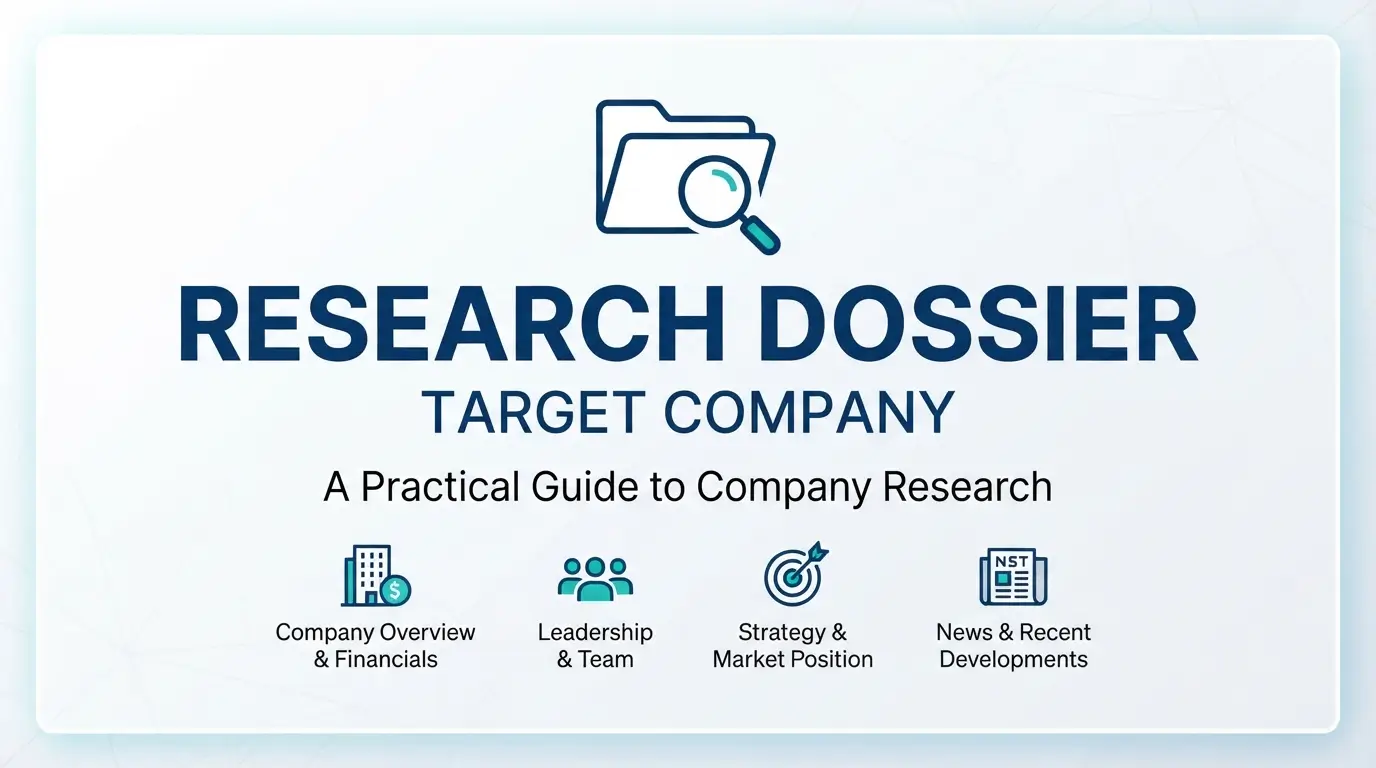
A research dossier for target company is a detailed research file prepared about a specific business. It usually contains basic company information as well as deeper research into the company’s operations, market position, products, leadership, competitors, financial information, and public reputation.
The word “target” does not necessarily mean something negative. It simply refers to the company being researched.
For example, a sales team may create a dossier before approaching a potential customer. An investor may prepare one before considering an investment. A job seeker may research a company before an interview. A consultant may create a dossier before developing a business strategy.
The purpose is always similar: understand the company before taking action.
Why Company Research Matters
Businesses operate in competitive environments. A company may look successful from the outside while facing challenges that are not immediately visible.
Detailed research can reveal useful information about how a company actually operates.
A proper dossier can help answer questions such as:
- What does the company actually do?
- Who owns or controls it?
- Who are its main customers?
- What products or services generate revenue?
- Who are its major competitors?
- What markets does it operate in?
- What recent changes has it made?
- What opportunities and risks should be considered?
Having these answers before a meeting or business decision can make preparation much easier.
The Basic Company Profile
Every research dossier should begin with a simple company profile.
This section should provide the basic facts that allow a reader to understand the organization quickly.
Important information may include the company’s official name, website, headquarters, founding year, industry, major products or services, business model, operating locations, and company size when reliable information is available.
It is useful to keep this section factual and concise. A reader should be able to understand the company in a few minutes without going through the entire dossier.
Company History
The history section explains how the company developed over time.
Look for major milestones such as its founding, important product launches, acquisitions, mergers, expansion into new markets, leadership changes, and major changes in strategy.
A timeline can make this information easier to understand.
For example, instead of writing several long paragraphs, you can explain that the company was founded in one year, launched its main product later, entered an international market several years afterward, and then acquired another business.
This gives the reader a clear picture of the company’s development.
Leadership and Management
People play a major role in any organization, so leadership should be an important part of a research dossier.
Research the company’s senior executives, founders, board members, and other key decision-makers when this information is publicly available.
The goal is not to create personal profiles for the sake of collecting information. Instead, focus on professional information that helps explain how the company is managed.
For example, you may want to understand whether the current CEO is a founder, whether the company has recently changed leadership, or whether a new executive has experience in an important market.
Recent management changes can sometimes provide useful context when studying a company’s direction.
Products and Services
The next major section should explain what the company sells.
Do not simply copy product descriptions from the company’s website. Try to understand the products from the customer’s point of view.
Consider what problem each product solves, who uses it, how it differs from alternatives, and how important it appears to be to the company’s overall business.
If the company has many products, group them into clear categories.
For example, a technology company might offer software, cloud services, cybersecurity tools, and consulting. Organizing these offerings makes the business easier to understand.
Target Customers
Knowing who buys from a company is just as important as knowing what it sells.
A research dossier should identify the company’s major customer groups whenever reliable information is available.
Customers might include consumers, small businesses, large corporations, government organizations, educational institutions, or other specialized groups.
Look for information about customer demographics, industries served, geographic markets, and customer needs.
This information becomes especially useful for sales and marketing research because it explains who the company is trying to reach.
Business Model
The business model explains how the company makes money.
Some businesses sell products directly. Others use subscriptions, advertising, commissions, licensing, memberships, marketplaces, or a combination of different methods.
Understanding the business model can reveal what drives growth.
For example, a subscription company may focus heavily on customer retention because recurring revenue depends on keeping customers over time. A marketplace may focus on attracting both buyers and sellers.
A good research dossier explains these relationships in simple language rather than using unnecessary business terminology.
Market and Industry Analysis
A company does not operate in isolation. Its performance is affected by the industry around it.
The dossier should therefore include a basic overview of the market.
Research the size of the market when credible data is available, major industry trends, changing customer behavior, important regulations, emerging technologies, and other forces affecting the sector.
It is important to distinguish between facts and predictions. A published market statistic is different from an analyst’s forecast.
If you include forecasts, clearly identify them as forecasts and mention the source and relevant time period.
Competitor Research
Competitor research is one of the most useful parts of a company dossier.
Start by identifying direct competitors that offer similar products to similar customers. Then consider indirect competitors that solve the same customer problem in a different way.
For each major competitor, examine products, pricing, target customers, geographic presence, distribution methods, and notable strengths or limitations based on publicly available evidence.
Avoid simply declaring one company “better.” The purpose of research is to show meaningful differences.
For example, one competitor may have a larger customer base while another may specialize in a smaller market. One may compete mainly on price while another focuses on premium features.
These differences can tell a much more useful story than a simple ranking.
Financial Information
Financial research can provide valuable insight into a company’s condition, although the available information depends on whether the company is public or private.
Public companies generally provide more financial information because of reporting requirements. Depending on the jurisdiction, this may include annual reports, quarterly reports, revenue figures, operating income, assets, liabilities, and other financial measures.
Private companies may disclose much less information.
When preparing a dossier, use financial figures carefully. Always include the year or reporting period because financial numbers can become outdated quickly.
For example, revenue from 2023 should not be presented as if it represents the company’s current revenue in 2026.
Funding and Investment
For startups and private companies, funding history can be an important part of the research.
Look for publicly announced funding rounds, investors, acquisitions, and other major financial events.
However, be careful with claims about company valuation. A valuation reported during a previous funding round does not necessarily represent the company’s current value.
The date and context of every financial figure matter.
Technology and Digital Presence
For technology-focused companies, the research dossier should include information about their digital presence and technology strategy.
This can include websites, mobile applications, software platforms, cloud services, public product documentation, and major technology partnerships.
For non-technology companies, digital research can still be useful.
Look at how the business uses websites, social media, online stores, customer portals, and other digital channels.
The goal is to understand how technology supports the company’s business rather than simply listing every digital property it owns.
Reputation and Public Perception
A company can have strong products and still face reputation challenges.
Research public reviews, customer feedback, reputable news coverage, industry publications, and other credible sources.
Do not treat every online comment as fact. Individual reviews can be useful for identifying themes, but they do not necessarily represent the entire customer base.
A stronger approach is to look for repeated patterns across multiple reliable sources.
If customers frequently mention the same issue, it may deserve attention. At the same time, the dossier should distinguish between documented facts and personal opinions.
Legal and Regulatory Issues
A thorough research dossier should include significant legal or regulatory developments when they are relevant and publicly documented.
This may include lawsuits, regulatory investigations, fines, intellectual property disputes, or compliance issues.
Legal information needs especially careful handling.
An allegation is not the same as a finding of wrongdoing. A lawsuit being filed does not automatically mean that one side has won or that the allegations have been proven.
Use neutral language and clearly identify the status of the matter.
Company Strengths and Challenges
After collecting the research, summarize the most important findings.
This section should not simply praise or criticize the company. Instead, it should identify evidence-based strengths and challenges.
Potential strengths might include a large customer base, strong distribution, recognizable products, valuable intellectual property, or expansion into growing markets.
Potential challenges might include intense competition, regulatory pressure, dependence on a small number of customers, supply-chain problems, or rapidly changing technology.
Each conclusion should be connected to evidence from the earlier sections.
How to Organize a Research Dossier
A well-organized dossier is much easier to use than a large collection of random notes.
A practical structure looks like this:
- Executive summary
- Company profile
- History and milestones
- Leadership
- Products and services
- Customers and markets
- Business model
- Industry overview
- Competitor analysis
- Financial information
- Technology and digital presence
- Reputation
- Legal and regulatory information
- Opportunities and challenges
- Sources and research notes
This structure works for many different types of company research.
How to Research Efficiently
Good research does not mean collecting every piece of information available.
Start with the questions you actually need to answer. Then prioritize reliable sources.
Official company documents can be useful for basic facts and financial information. Government databases can provide regulatory and corporate records. Established news organizations and respected industry publications can provide independent reporting.
Search results and social media can help you discover leads, but important claims should be verified before being included in the final dossier.
It is also useful to record the date when information was collected.
Company information changes constantly. A dossier that was accurate last year may contain outdated information today.
Common Mistakes to Avoid
One common mistake is relying entirely on the company’s own website. Company websites are useful, but they naturally present the business from the company’s perspective.
Another mistake is copying information without checking the publication date.
Researchers should also avoid mixing confirmed facts with assumptions. If something cannot be verified, it is better to identify it as uncertain than to present it as fact.
Finally, avoid making the dossier unnecessarily long. A useful research document is not the one with the most pages. It is the one that helps the reader understand the company quickly and accurately.
Final Thoughts
Creating a research dossier for target company is one of the most practical ways to understand a business before making an important decision.
A strong dossier brings together company history, leadership, products, customers, competitors, financial information, industry trends, reputation, and potential challenges in one organized document.
The most important part is not simply collecting information. It is evaluating that information carefully, checking dates, using reliable sources, and clearly separating facts from opinions and predictions.
Whether you are preparing for a sales meeting, evaluating a potential investment, researching a competitor, preparing for a job interview, or studying an industry, a well-built company dossier can turn scattered information into a useful picture of the business.
The best research is also kept current. Companies change, markets move, executives leave, products evolve, and new competitors appear. Updating the dossier regularly ensures that the information remains useful when it matters most.